
 English
 Español
 Pусский
 العربية


beating degree tester
A beating degree tester is a specialized instrument used to evaluate the refining condition of pulp, especially in paper production and related laboratory testing. It measures the degree to which fiber materials have been beaten or refined, which strongly affects how pulp behaves during paper formation. This testing process is important because the beating degree influences many final paper properties, including strength, drainage rate, surface smoothness, bulk, and printability.In simple terms, the beating degree reflects how much the fibers have been mechanically treated to change their structure. During beating or refining, fibers become more flexible, more fibrillated, and better able to bond with one another. A beating degree tester helps determine whether the pulp has reached the desired refining level. If the beating degree is too low, the fibers may not bond well, leading to weak paper. If it is too high, the fibers may drain too slowly and the sheet may become overly dense or difficult to produce efficiently. For this reason, accurate testing is essential in quality control and process optimization.The tester is commonly used in paper mills, pulp laboratories, research centers, and educational settings. It provides a practical way to monitor changes in pulp characteristics during refining experiments or routine production checks. By comparing test results at different stages, operators can adjust refining time, mechanical action, or process parameters to achieve consistent material performance.A beating degree tester usually works by measuring the drainage resistance of a pulp suspension after standardized treatment. The result is often expressed in a unit that represents the pulp’s degree of refinement. The test method is designed to be repeatable so that results from different samples can be compared fairly. To ensure accuracy, the equipment must be properly calibrated and operated according to the required testing procedure.The structure of a beating degree tester generally includes a measuring chamber, filtration or drainage components, a control mechanism, and a reading system. Some models are manual, while others are more advanced and include digital displays, automated timing, and precise control functions. Modern instruments improve efficiency and reduce operator error, making test results more reliable.Using a beating degree tester offers several benefits. It supports stable paper quality, helps reduce material waste, improves production control, and provides valuable data for research and development. It also allows manufacturers to evaluate different pulp types and refining conditions before large-scale production.Overall, a beating degree tester is an important tool in the paper industry. It helps users understand pulp refinement behavior, maintain product consistency, and make informed decisions during manufacturing and laboratory analysis.
Produit
Catégorie:
Pulp Testing Instruments
-
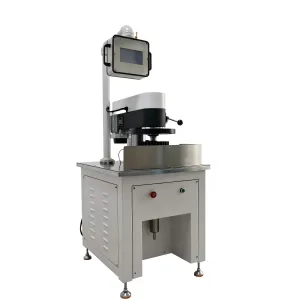
Batteur PFI intelligent
Leur classification: Pulp Preparation & Sheet Forming EquipmentVues: 268Numéro:Temps de libération: 2026-06-03 16:03:58L'Intelligent PFI Beater est un appareil de laboratoire standard pour la recherche sur le battage de la pulpe. Il applique une action de cisaillement entre le rouleau rotatif et le boîtier fixe pour affiner les fibres. Le boîtier cylindrique a un diamètre intérieur de φ250 mm avec un rouleau de φ200 mm et l'écartement des battements est réglable de 0 à 25 mm. Le lève-rouleau utilise un positionnement vertical entièrement automatique du capteur avec commande par écran tactile. La vitesse de fonctionnement est de 1 490 ± 10 tr/min avec une plage de consistance de battage de 5 à 20 % (optimum 10 %) et une capacité de 5 à 30 grammes de pâte séchée au four. Construit en acier inoxydable et conforme à la norme ISO 5264/2, il constitue l'équipement de base pour la recherche sur le battage de la pâte à papier.
Actualités
Catégorie:
Aucun résultat de recherche!
Affaire
Catégorie:
Aucun résultat de recherche!
Vidéo
Catégorie:
Aucun résultat de recherche!
Téléchargement
Catégorie:
Aucun résultat de recherche!
Recrutement
Catégorie:
Aucun résultat de recherche!
Produits recommandés
-
NEWS
Batteur PFI intelligent
En savoir plus



 Téléphone