
 English
 Español
 Pусский
 العربية


pulp freeness tester
A pulp freeness tester is an essential laboratory instrument used in the paper and pulp industry to evaluate the drainage characteristics of pulp suspensions. It measures how easily water can pass through a pulp sample, which is a key indicator of fiber condition, refining level, and overall pulp quality. The test result is often used to monitor production consistency, control refining processes, and predict paper formation and strength properties.The basic principle of a pulp freeness tester is to determine the rate at which water drains from a diluted pulp slurry under standardized conditions. As pulp fibers are processed, they become more or less fibrillated and swollen, which changes the ease with which water can escape from the fiber network. A freeness tester provides a numerical value that reflects this drainage behavior. In practical use, a lower freeness value generally indicates slower drainage and a more highly refined pulp, while a higher value suggests faster drainage and a less refined pulp.This instrument is widely used in both laboratory and production environments. In a research laboratory, it helps technicians compare different pulp types, evaluate refining effects, and study the relationship between fiber treatment and paper properties. In a mill setting, it supports quality control by ensuring that the pulp being processed remains within the desired drainage range. By monitoring freeness, operators can adjust refining intensity, chemical treatment, or stock preparation conditions to achieve more stable results.A typical pulp freeness tester includes a drainage chamber, measuring vessel, screen or filter section, control valves, and a collection system for filtrate. The operator prepares a pulp sample at a specified consistency, places it into the device, and allows water to drain through the test screen. The collected filtrate or the drainage time is then measured according to a standard procedure. Some modern models are equipped with digital displays, automated filling and draining functions, and data recording features to improve accuracy and repeatability.Accuracy is important because pulp freeness values can be affected by temperature, sample consistency, fiber type, and test preparation. For this reason, users must follow standardized testing methods and keep the instrument clean and properly calibrated. Regular maintenance of seals, screens, and drainage paths helps ensure reliable performance.Overall, a pulp freeness tester is a valuable tool for understanding pulp behavior and managing paper manufacturing quality. It provides quick and practical information about drainage performance, helping engineers and technicians make informed process decisions. Whether used for routine inspection, product development, or process optimization, it plays a vital role in efficient pulp and paper testing.
Produit
Catégorie:
-
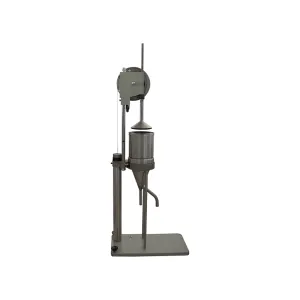
Freeness Tester
Leur classification: Pulp Testing InstrumentsVues: 217Numéro:Temps de libération: 2026-08-13 09:04:09The Freeness Tester (also known as a beating degree tester) is a specialized instrument designed according to the Schopper-Riegler method for measuring the drainage properties of pulp suspensions, expressed in degrees Schopper-Riegler (°SR). It is suitable for all types of pulp suspensions with a freeness not exceeding 100°SR. The instrument helps paper mills utilize raw materials most economically, terminate the beating process at the right time, and serves as a measure of fiber condition in scientific research. It fully complies with QB/T 1054-98, GB/T 3332-1982, and ISO 5267/1 standards. The measuring range is 0-100°SR with a graduation of 1°SR, using distilled water at 20±0.5°C and a drainage time of 149±1s. The instrument features stable construction, a sealing cone rising speed of 100±10mm/s, stainless steel support rods, a silicone sealing ring, and a spring-loaded disc locking mechanism. Standard accessories include measuring cylinders, a copper wire mesh, a sealing ring, and special wrenches. This instrument is an essential tool for evaluating fiber dispersion and beating effects in the pulp and paper, R&D, and wastepaper recycling industries. -
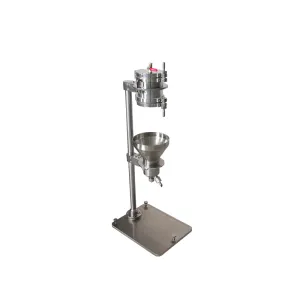
Freeness Tester
Leur classification: Pulp Testing InstrumentsVues: 185Numéro:Temps de libération: 2026-08-14 09:24:11The Freeness Tester is a standard instrument for measuring pulp freeness (CSF, Canadian Standard Freeness). It is primarily used for test values in groundwood pulp production control, while also being widely applicable to evaluating changes in drainability of various chemical pulps during beating and refining processes. The instrument has a measuring range of 0~1000 CSF and fully complies with international standards including TAPPI T227, ISO 5267/2, AS/NZ 1301, BS 6035 part 2, CPPA C1, and SCAN C21, as well as the Chinese industry standard QB/T 1669-1992. The standard model dimensions are 300mm (L) × 1120mm (H) × 400mm (W), with a weight of 57.2 kg. A wall-mounted structure is available as an option for overseas users. It should be noted that processing can generate large amounts of fines, sometimes causing abnormally high freeness readings (false freeness), with values below 100ml, and freeness values may not directly correlate with the drainage performance on the paper machine wire. This instrument is core equipment for evaluating pulp drainage performance in the papermaking, fiber research, and quality control fields.
Actualités
Catégorie:
Aucun résultat de recherche!
Affaire
Catégorie:
Aucun résultat de recherche!
Vidéo
Catégorie:
Aucun résultat de recherche!
Téléchargement
Catégorie:
Aucun résultat de recherche!
Recrutement
Catégorie:
Aucun résultat de recherche!
Produits recommandés
Aucun résultat de recherche!



 Téléphone